
Someone smiled at me this morning
and it touched my heart so deeply
The gift of smiling coming from deep within
touches the I AM in me
And that brings forward
tears and joy
A smile is God
received by ME
who is God
smiling back …

Someone smiled at me this morning
and it touched my heart so deeply
The gift of smiling coming from deep within
touches the I AM in me
And that brings forward
tears and joy
A smile is God
received by ME
who is God
smiling back …
The embrace that lies in these words, touched the deepest essence of Who I Am in me. I share this with you in deep respect and love. Wonderwandeling/Wonderwalk
Eckhart Tolle on Death & Dying

Q: How does one be with the process of death in such a way that it can be celebrated?
ET: Death is a great opportunity because death is one way in which the formless dimension comes into this life. It’s precisely at the moment of the fading of the form, that the formless comes into this life. But if that is not accepted, and the fading of form is denied, then it’s a missed opportunity.
As people around you pass away, you become increasingly aware of your own mortality. The body will dissolve. Many people still, in our civilization, they deny death. They don’t want to think about it, don’t want to give it any attention.
There is enormous potential there for spiritual flowering. Even in people who, up to the point of the beginning of the fading of the form, were completely identified with the form. It’s your last chance in this incarnation, as your body begins to fade – or you are becoming aware of this limited lifespan. It’s your last chance to go beyond identification with form. This is true whether it’s to do with your body, or somebody else’s body.
In the proximity of death, there is always that grace hiding underneath the seemingly negative event. Death in our civilization is seen as entirely negative, as if it shouldn’t be happening. Because it’s denied, people are so shocked when somebody dies – as if it’s not possible. We don’t live with the familiarity of death, as some more ancient cultures still do. The familiarity of death isn’t there. Everything is hidden, the dead body is hidden. In India you can see the dead bodies being carried through the streets, and being burned in public. To the Westerners, it’s terrible.
As the consciousness is changing, I feel that more and more death will become an important part of the evolutionary process, the process of the arising consciousness on our planet.
At any age, the form can dissolve. Even if you are very young, you may encounter death close to you. At any age, it is extremely helpful to become familiar with, or comfortable with, the impermanence of the physical form.
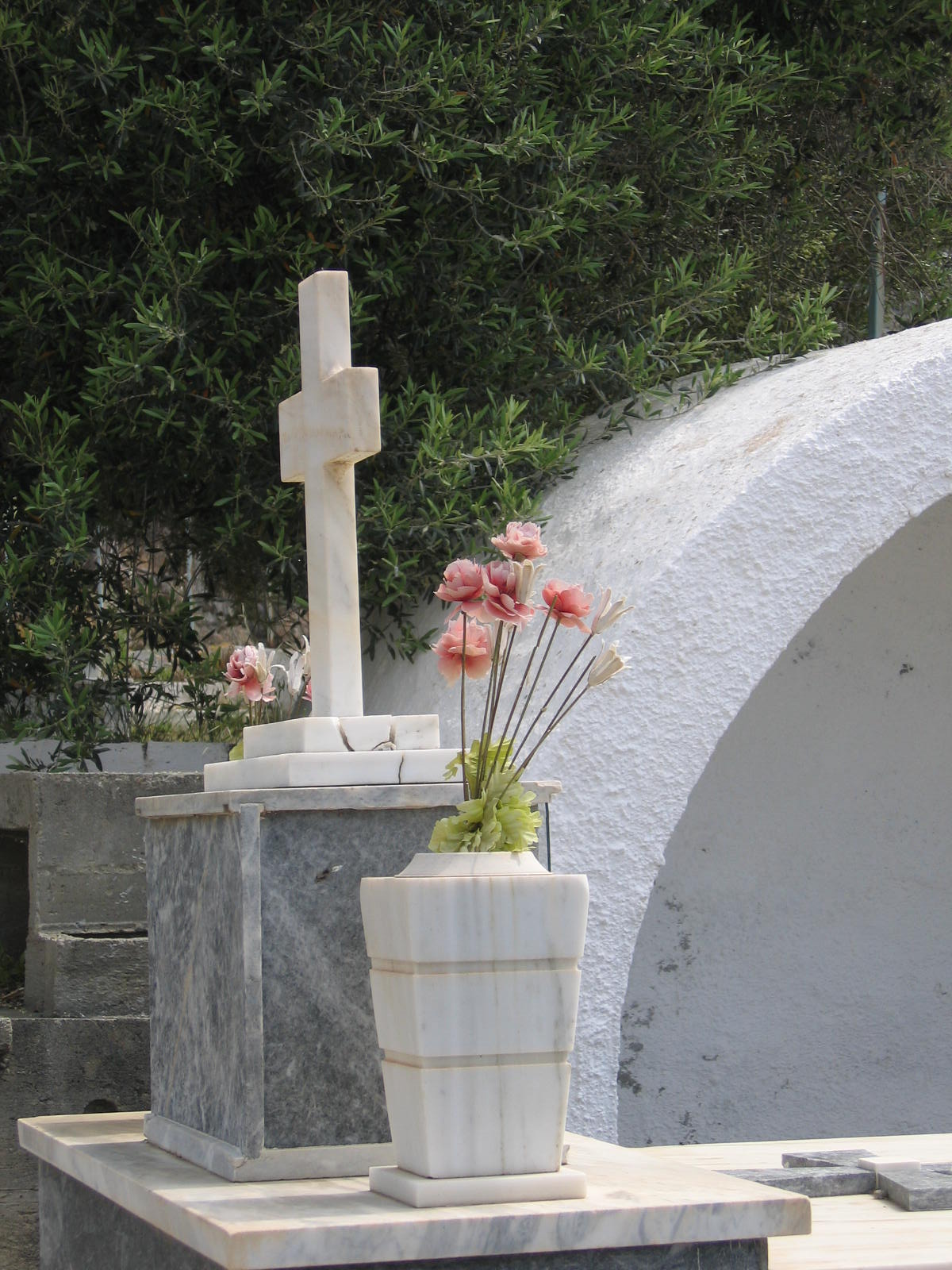
I recommend to everybody, to occasionally visit the cemetery. If it’s a nice cemetery, that makes it more pleasant. Some cemeteries are like beautiful parks, you can walk around and feel extremely peaceful. But even if it’s not nice, spiritually it is just as helpful to walk around the cemetery and contemplate the fact of death. I still do that, quite often, whenever I have a chance.
In Europe, in the villages and so on, you have a cemetery next to the church very often. I love walking around there. My favorite thing is reading the names on the gravestones. Sometimes if the gravestones are very old, you’ll see that the name is not there anymore – it got eroded by the weather.
It’s the contemplation of death and the acceptance of the impermanent nature of the human form that opens up, if you accept it. Don’t intellectualize it. Don’t come to some kind of conclusion about it. Just stay with the simple “isness” of the fact of the impermanence of the human form, and accept that for what it is without going any further. If you go further, you get into comforting beliefs, that’s very nice too. But what I am driving at is something deeper than comforting beliefs – instead of going to some kind of conclusion, stay with the fact of the impermanence of the human form, and contemplate this fact.
With the contemplation of the impermanence of the human form, something very deep and peaceful opens up inside you. That is why I enjoy going to cemeteries. When you accept the impermanence, out of that comes an opening within, which is beyond form. That which is not touched by death, the formless, comes forward as you completely accept the impermanence of all forms. That’s why it is so deeply peaceful to contemplate death.
If someone close to you dies, then there is an added dimension. You may find there is deep sadness. The form also was precious, although what you loved in the form was the formless. And yet, you weep because of the fading form. There too, you come to an acceptance – especially if you are already familiar with death, you already know that everything dies – then you can accept it more easily when it happens to somebody close to you. There is still deep sadness, but then you can have the two dimensions simultaneously – the outer you weeps, the inner and most essential is deeply at peace. It comes forward almost as if it were saying “there is no death”. It’s peace.

I already was
before
I knew it …
I already knew
before
I was it …

Show me the place
where words are still
and thoughts are gone
Show me the place
where tears may fall
and arms will hold
Show me the place
where stillness grows
and silence speaks
Show me the place
where you are home
and never leave …

Surrender
to what is
comes
when the time and You
are ready …

Selfrealization
does not happen in your head
Selfrealization
happens in your heart
That’s why
the mind can not understand it …
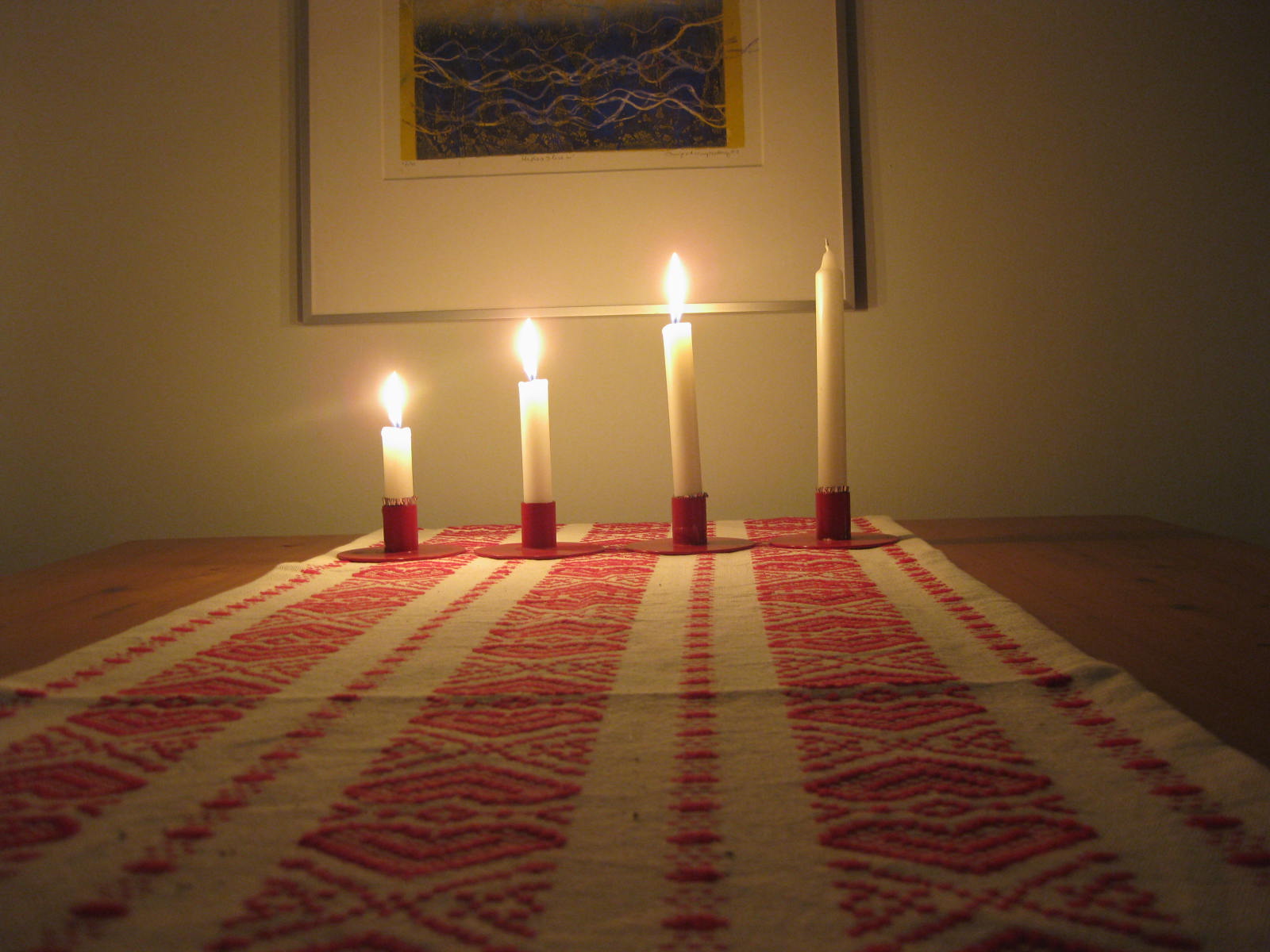
When Wisdom touches you,
receives you,
nurtures you,
and welcomes you
in her arms of Light
Confusion will melt,
the darkness,
the pain
And words can be heard
and be held
in the infinite wisdom
that you always are …
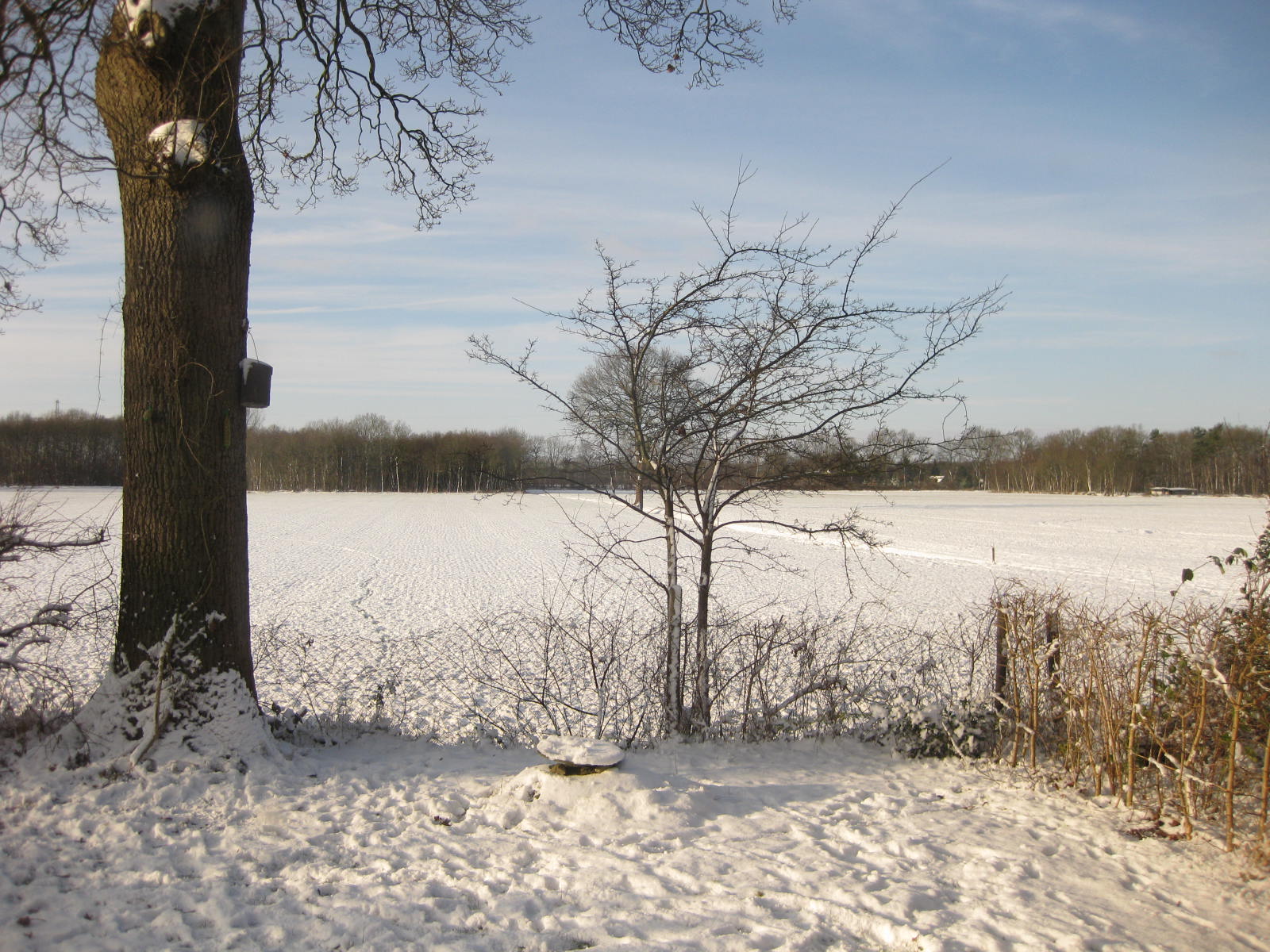
Walking in the pristine snow
with almost silent sound of falling snow
the tears of Gratitude pour out
and melt the white sweet cover
I feel the lively essence
of what I AM in me
and have no words for that
which is alive in me
How can I define this wonder
and bind it to some words?
Life is the wordless beauty
present in the stillness
of freshly fallen snow …

What if God is the good guy,
the bad guy, the stone, the dog?
What if God is what you like,
don’t like, project unto others?
What if God is what you see, hear,
smell, sense, feel and taste?
What if God is the earth, the sun,
the moon, the universe and beyond?
What if God is everything that comes,
woven in the fabric of your destiny?
What if God is you and me,
and all the others?
What if God is everything
including me, and everything in me?
Be still and Know I Am God …

When there is no “I” who listens
there is no “I” who reacts
Then there is only: listening
What a precious enormous gift
to the other
to yourself …
Deep listening is the kind of listening that can help relieve the suffering of another person. You can call it compassionate listening. You listen with only one purpose: to help him or her to empty his heart. Even if he says things that are full of wrong perceptions, full of bitterness, you are still capable of continuing to listen with compassion. Because you know that listening like that, you give that person a chance to suffer less. If you want to help him to correct his perception, you wait for another time. For now, you don’t interrupt. You don’t argue. If you do, he loses his chance. You just listen with compassion and help him to suffer less. One hour like that can bring transformation and healing.
~Thich Nhat Hanh
 Wonderwalk